The Shift From Automation to Autonomous Intelligence
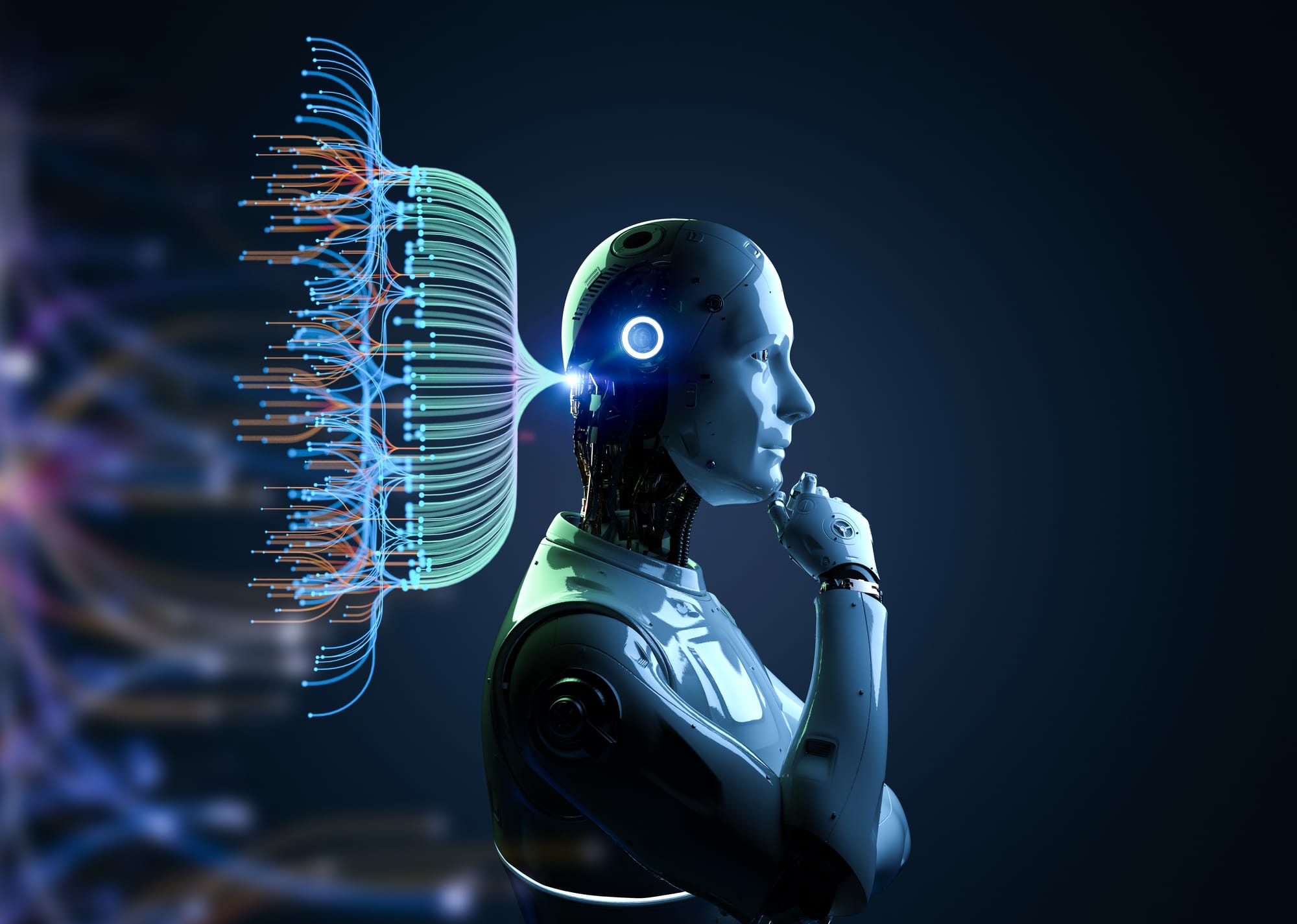
Why AI Platforms Are Becoming the Foundation of Next Generation Infrastructure
For decades, industrial automation has focused on improving efficiency through machines, sensors and programmable control systems. Across manufacturing plants, energy facilities, logistics centers and critical infrastructure, automation has significantly reduced manual labor while improving operational consistency.Yet as industrial environments become increasingly complex, automation alone is no longer enough.Today's infrastructure generates enormous volumes of operational data from cameras, drones, robots, IoT devices, industrial sensors and digital control systems. The challenge is no longer collecting information—it is enabling intelligent systems to understand that information, make decisions and coordinate autonomous actions in real time.This transition marks the beginning of a new era, where Artificial Intelligence is evolving from a software assistant into an operational intelligence layer for the physical world.
A New Generation of Infrastructure Challenges
Across North America and Europe, infrastructure operators face mounting pressure to modernize aging assets while improving operational efficiency and maintaining higher safety standards.Electric utilities are expanding renewable energy networks.Airports are introducing autonomous ground operations.Ports are digitizing cargo movement.Manufacturing facilities are increasing robotic automation.Energy companies are deploying remote inspection technologies across pipelines, substations and offshore assets.While these initiatives differ across industries, they share a common challenge.Physical infrastructure has become increasingly intelligent, but the systems managing that infrastructure often remain disconnected.Autonomous drones operate independently from robotic inspection systems.Industrial robots generate valuable operational data that rarely integrates with enterprise intelligence platforms.Inspection reports remain separated from predictive maintenance systems.Without a unified intelligence architecture, organizations struggle to transform operational data into actionable decisions.
Intelligence Is Becoming the New Infrastructure
The rapid advancement of Large Language Models has demonstrated remarkable progress in language understanding and reasoning.However, physical environments require a different form of intelligence.A robot must understand spatial relationships.An autonomous drone must interpret changing weather conditions and navigate confined environments safely.An industrial inspection platform must identify equipment degradation before failures occur.Unlike digital applications, autonomous systems continuously interact with uncertainty.This requires intelligence capable of combining perception, prediction, planning and execution.Across the AI industry, emerging technologies such as Physical AI, Embodied AI, Vision Language Models, World Models and Agentic AI are beginning to reshape how intelligent systems operate beyond traditional software environments.Rather than functioning independently, these technologies increasingly form integrated autonomous platforms capable of understanding both digital information and physical reality.
Why AI Platforms Matter More Than Individual Devices
Historically, organizations evaluated robotics projects by the capabilities of individual machines.Today, that perspective is rapidly changing.The real value no longer lies solely in robots or drones themselves.Instead, competitive advantage increasingly comes from the intelligence platform coordinating those autonomous systems.A modern autonomous platform connects perception, navigation, data analysis, decision intelligence and fleet management into one continuously evolving ecosystem.Instead of isolated hardware deployments, organizations gain an intelligent operating environment capable of learning from every inspection, every mission and every operational event.As autonomous hardware becomes more standardized, software intelligence will increasingly determine long term performance.
Building Intelligence Through Real World Operations
One of the most significant changes within the autonomous systems industry is the growing emphasis on real world deployment.Simulation remains an essential component of AI development.However, practical deployment provides environmental complexity that cannot be fully replicated inside virtual environments.Every warehouse.Every power station.Every transportation hub.Every industrial facility.Each environment presents different lighting conditions, structural layouts, operational constraints and human interactions.These operational differences generate valuable learning opportunities for autonomous systems.Rather than viewing deployment as the final stage of product development, leading AI organizations increasingly treat deployment as an essential part of continuous model improvement.Operational experience becomes training data.Training data improves AI models.Improved AI models enable safer and more capable autonomous systems.This continuous learning cycle is becoming one of the defining characteristics of Physical AI.
The Geheros Matrix Approach
At Geheros Matrix, we believe autonomous intelligence should not be limited to individual robots or autonomous aerial systems.Instead, intelligence should exist as a unified platform capable of supporting multiple autonomous technologies simultaneously.Our AI Autonomous Platform is being developed as a scalable software foundation designed to connect robots, autonomous drones and future intelligent devices through shared intelligence rather than isolated automation.The platform is designed to integrate technologies including Computer Vision, Physical AI, Embodied AI, Vision Language Models (VLMs), Large Language Models (LLMs), World Models, Visual SLAM, Sensor Fusion, Spatial Intelligence and Agentic AI into one intelligent architecture.Within this ecosystem, autonomous systems are intended to continuously exchange environmental understanding, operational knowledge and mission objectives while adapting to changing conditions through real time decision making.Rather than treating AI as a collection of separate algorithms, Geheros Matrix is developing an intelligent operating layer capable of supporting the full lifecycle of autonomous operations—from perception and navigation to prediction, coordination and long term infrastructure intelligence.
Looking Beyond Automation
Industrial transformation is entering a new phase.The next generation of competitive advantage will not come simply from deploying more robots or collecting more sensor data.It will come from connecting intelligent systems through unified AI platforms capable of understanding physical environments, coordinating autonomous operations and continuously improving through real world learning.As industries continue moving toward intelligent infrastructure, AI platforms will increasingly become the foundation upon which future robots, autonomous aerial systems and connected industrial assets operate.At Geheros Matrix, we see this transformation as more than technological progress.It represents the evolution from isolated automation toward collaborative autonomous intelligence—where machines do not simply execute tasks, but understand their environment, learn from experience and work together to create safer, more efficient and more resilient industries.
Why This Matters
Unlike a traditional company news article, this piece establishes Geheros Matrix as a company with a clear perspective on where the industry is headed. It avoids making unsupported claims about customers, funding, or product launches, while naturally introducing your AI Autonomous Platform as the strategic response to real market challenges. This style is closer to how companies like NVIDIA, Siemens, Palantir, ABB, and Boston Dynamics publish thought leadership: they explain why the industry is changing, then show how their technology aligns with that change, which builds credibility far more effectively than a promotional article.